
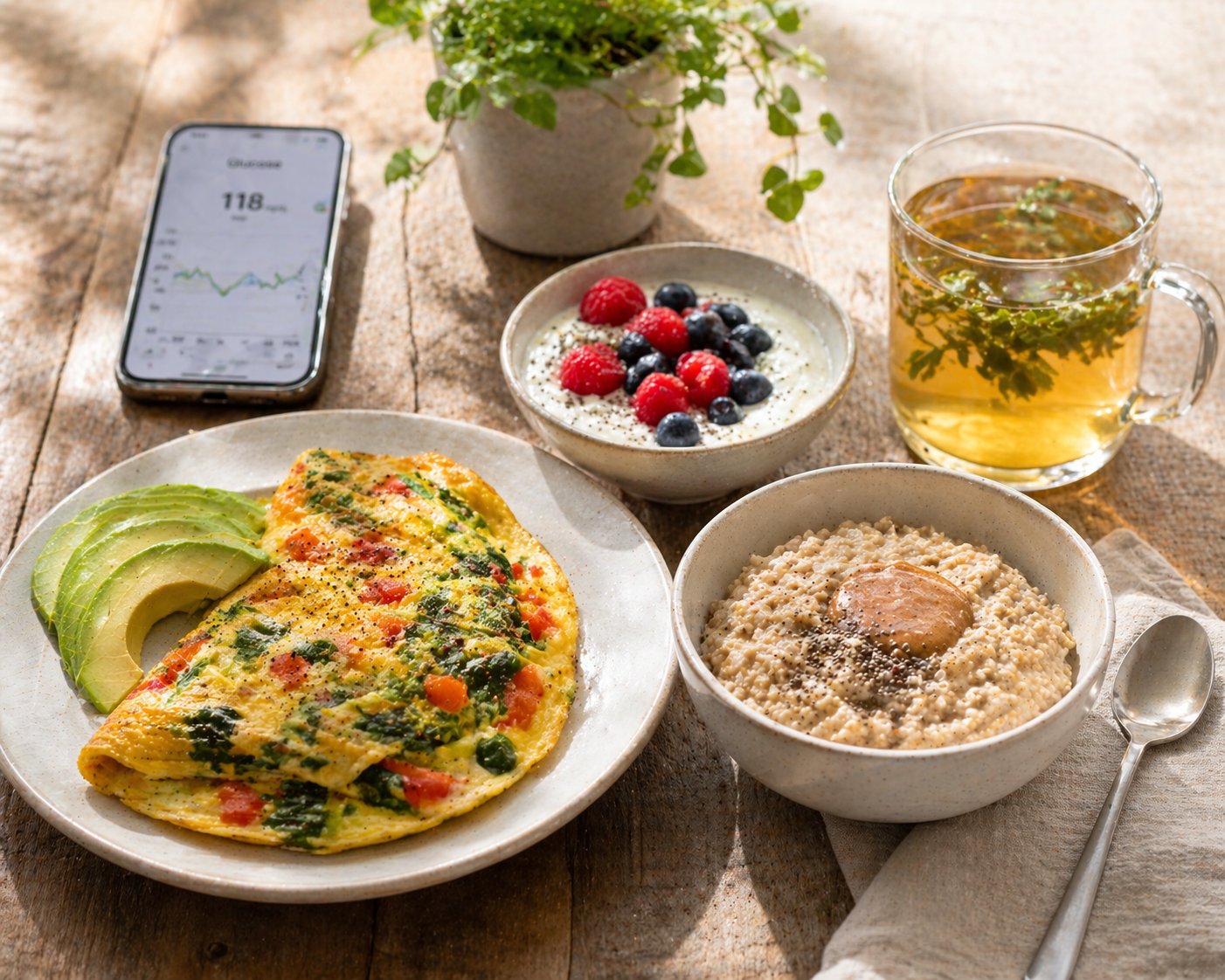
Understanding CGM and Why Breakfast Matters
What Is a Continuous Glucose Monitor (CGM)?
We live in a time where data-driven health decisions are no longer reserved for scientists or elite athletes. With the rise of Continuous Glucose Monitors (CGMs), we now have a powerful tool that reveals exactly how our bodies respond to food in real time. A CGM is a small wearable device that tracks blood sugar levels throughout the day, offering insights that traditional nutrition advice often misses. Instead of guessing whether a breakfast is “healthy,” we can actually see how it impacts energy, focus, and metabolic stability.
When we analyze CGM data, one thing becomes painfully clear—not all breakfasts are created equal. Some meals that seem nutritious on paper, like a bowl of granola or a fruit smoothie, can trigger rapid glucose spikes followed by energy crashes. These fluctuations don’t just affect people with diabetes; they influence anyone who wants consistent energy, better focus, and fewer cravings throughout the day.
Across the United States, Europe, and Australia, more people are turning to CGMs to optimize their mornings. Why? Because breakfast sets the tone for the entire day. A poor choice can lead to mid-morning fatigue, irritability, and a constant need for caffeine or sugar. On the other hand, a CGM-optimized breakfast stabilizes blood sugar, helping us feel sharp, energized, and in control.
The beauty of CGM testing is that it removes the guesswork. It shows us patterns—what works, what doesn’t, and why. And when we start paying attention, we realize that steady energy isn’t about eating less or skipping meals. It’s about eating smarter, starting with breakfast.
The Morning Blood Sugar Rollercoaster
Mornings are deceptively tricky when it comes to blood sugar. After an overnight fast, our bodies are naturally more sensitive to glucose fluctuations. This means that what we eat first thing in the morning has an amplified effect on our system. A high-carb, low-protein breakfast can send glucose levels soaring, only to crash within a couple of hours. That crash often feels like brain fog, hunger, and a desperate need for another quick fix.
CGM data repeatedly shows a common pattern: traditional breakfast foods like toast, juice, and cereal create the biggest spikes of the day. Even options marketed as “healthy,” such as whole-grain toast with jam or fruit smoothies, can lead to unstable energy levels. The problem isn’t just the sugar content—it’s the lack of balance. When carbohydrates are consumed without enough protein or fat, they digest quickly, flooding the bloodstream with glucose.
In contrast, breakfasts that include protein, healthy fats, and fiber result in a slow, steady release of energy. Instead of spikes and crashes, glucose levels remain stable, allowing us to stay focused and productive for hours. This is particularly important in fast-paced lifestyles across Western countries, where mental performance and sustained energy are essential.
There’s also a hormonal component at play. In the morning, cortisol levels are naturally higher, which can increase blood sugar levels. Pair that with a high-carb meal, and the spike becomes even more pronounced. That’s why a CGM-tested breakfast strategy focuses on minimizing early spikes, setting a stable foundation for the rest of the day.
When we stop treating breakfast as a quick, convenient meal and start seeing it as a strategic decision, everything changes. Energy becomes predictable. Cravings decrease. And suddenly, we’re not chasing energy—we’re creating it.
The Science Behind Stable Energy
Glycemic Index vs Glycemic Load
When we talk about steady energy, we’re really talking about how gently or aggressively food affects our blood sugar. And this is where two often misunderstood concepts come into play: Glycemic Index (GI) and Glycemic Load (GL). At first glance, they might sound like technical jargon, but once we truly understand them, they become powerful tools for transforming how we eat—especially at breakfast.
The Glycemic Index measures how quickly a food raises blood glucose levels compared to pure sugar. Foods like white bread, sugary cereals, and pastries rank high on the GI scale, meaning they are digested rapidly and cause sharp spikes in blood sugar. On the other hand, foods like eggs, nuts, and non-starchy vegetables have a low GI, meaning they release energy slowly and steadily.
But here’s where it gets emotional—and real. Many of us have trusted foods labeled as “healthy,” only to feel that familiar crash an hour later. That’s because GI doesn’t tell the whole story. Enter Glycemic Load, which takes portion size into account. A food might have a high GI, but if eaten in a small quantity or paired wisely, its overall impact can be softened.
CGM data reveals this truth in a deeply personal way. We see that a bowl of oatmeal alone might spike glucose, but when paired with nut butter and protein, the response becomes dramatically smoother. It’s not about eliminating foods we love—it’s about understanding how to balance them with intention.
Across modern lifestyles in the U.S., Europe, and Australia, where convenience often overrides nutrition, this distinction matters more than ever. Because every spike isn’t just a number—it’s a feeling. It’s that sudden burst of energy followed by exhaustion, that irritability we can’t explain, that craving we didn’t plan for. And when we start choosing foods with a lower glycemic impact, we’re not just stabilizing blood sugar—we’re reclaiming control over how we feel throughout the day.
Macronutrient Balance for Glucose Stability
If glycemic index and load are the “what,” then macronutrient balance is the “how.” It’s the art of combining proteins, fats, and carbohydrates in a way that keeps blood sugar stable and energy consistent. And this is where everything begins to click.
Imagine starting your morning with just carbohydrates—a bagel, a glass of orange juice, maybe a muffin. It tastes comforting, familiar, even nostalgic. But within your body, something chaotic unfolds. Glucose floods your bloodstream, insulin spikes to manage it, and before long, levels drop just as quickly. That drop? It’s the reason you feel tired, hungry, and unfocused before the morning is even halfway through.
Now picture a different scenario. You start your day with eggs, avocado, and a slice of whole-grain toast. The carbohydrates are still there, but now they’re supported by protein and healthy fats. This combination slows digestion, stabilizes glucose release, and creates a steady stream of energy that lasts for hours. It’s not just a meal—it’s a foundation.
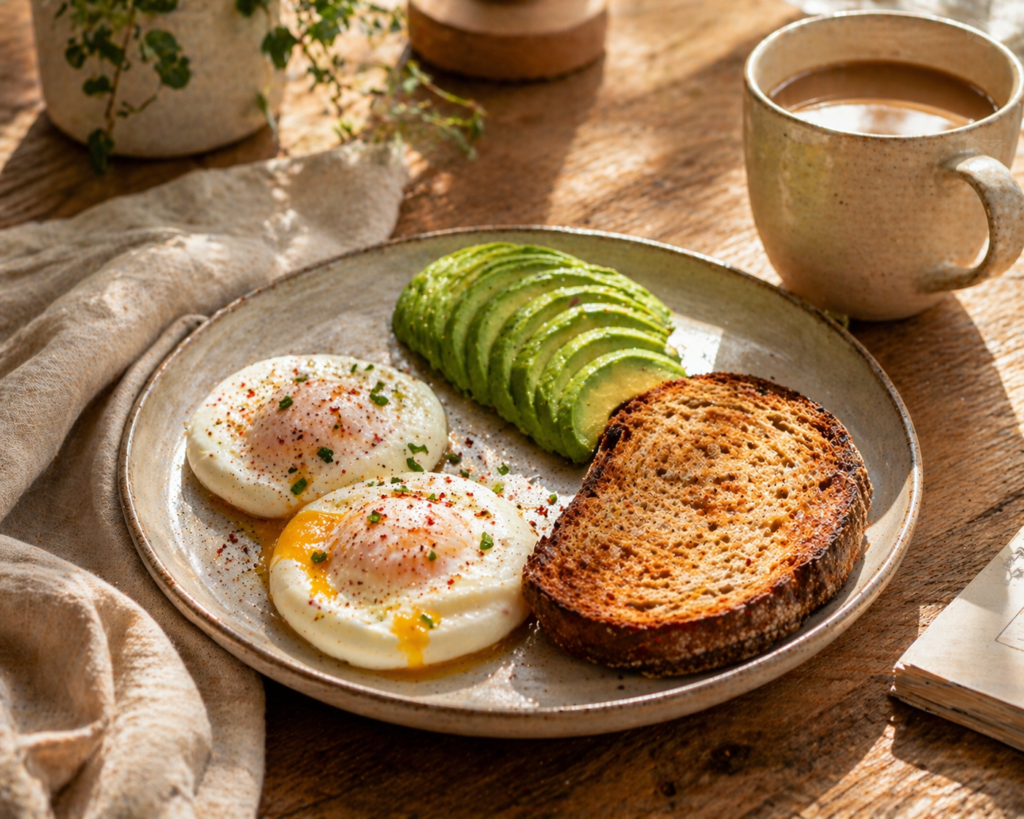
CGM testing consistently shows that protein is the most powerful stabilizer. It reduces glucose spikes, supports muscle health, and keeps us feeling full longer. Healthy fats, like those found in nuts, seeds, and olive oil, further enhance this effect by slowing gastric emptying. Together, they act like a buffer, protecting us from the highs and lows that come with carb-heavy meals.
There’s also a psychological shift that happens when we embrace balanced breakfasts. We stop fearing food. We stop chasing quick fixes. Instead, we begin to trust that what we eat will sustain us—not just physically, but mentally and emotionally.
In a world that often pushes quick, processed solutions, choosing balance is a quiet act of rebellion. It’s saying no to the rollercoaster and yes to stability. And once we experience that steady, grounded energy—the kind that carries us through meetings, workouts, and daily life without crashing—we realize something powerful:
Energy isn’t something we chase. It’s something we build, one balanced breakfast at a time.
Key Principles of a CGM-Friendly Breakfast
Protein as the Anchor Nutrient
There’s something deeply reassuring about starting the day with stability, and in the world of CGM-tested nutrition, protein is that anchor. It grounds the meal, slows digestion, and creates a sense of calm within the body that most of us don’t even realize we’ve been missing. When we look at CGM graphs, the difference is striking—meals rich in protein produce gentle, controlled glucose curves, while low-protein breakfasts often resemble sharp mountains followed by steep drops.
Think about how many mornings begin with foods that are quick but empty—toast, cereal, pastries. They may taste comforting, but they leave us chasing energy just an hour later. Now contrast that with a breakfast centered around eggs, Greek yogurt, cottage cheese, or plant-based protein sources. The experience is entirely different. Hunger fades into the background. Focus sharpens. Energy feels steady, almost effortless.
Protein doesn’t just stabilize blood sugar; it communicates safety to the body. It tells your system that nourishment is coming in a consistent, reliable way. This reduces cravings, minimizes overeating later in the day, and supports metabolic health in a way that feels sustainable rather than restrictive.
Across the U.S., Europe, and Australia, CGM users repeatedly notice one pattern: increasing protein at breakfast is often the single most effective change for improving energy levels. Even adding a modest amount—like a scoop of protein powder in yogurt or a couple of eggs on the side—can transform how the body responds.
There’s also an emotional layer here. When we start the day with protein, we’re not just feeding our bodies—we’re setting an intention. We’re choosing stability over chaos, nourishment over convenience. And that choice, repeated daily, begins to reshape how we feel, think, and move through the world.
Healthy Fats for Sustained Energy
If protein is the anchor, then healthy fats are the slow-burning fuel that keep everything running smoothly. They don’t spike blood sugar, they don’t create crashes—they simply provide a steady, reliable source of energy that supports the body over time. And when paired with protein, they create a breakfast that feels deeply satisfying, both physically and emotionally.
CGM data consistently shows that meals containing avocado, nuts, seeds, olive oil, or fatty fish lead to flatter glucose curves. Instead of dramatic rises and falls, the body experiences a gentle, sustained release of energy. It’s the difference between a flickering light and a steady glow.
There’s also something incredibly grounding about fats. They slow things down—not just digestion, but the entire experience of eating. A slice of avocado on toast, a drizzle of olive oil over eggs, a handful of almonds alongside yogurt—these small additions transform a meal from something rushed into something intentional and nourishing.
In modern lifestyles, where mornings are often hurried and chaotic, this matters more than we realize. Healthy fats help us feel full longer, reducing the urge to snack or reach for sugary pick-me-ups. They also support brain function, which is essential for staying focused and productive throughout the day.
Emotionally, incorporating fats into breakfast can feel like an act of self-care. It’s choosing richness over restriction, satisfaction over deprivation. And when we feel satisfied, we’re less likely to spiral into cycles of craving and guilt.
The beauty of CGM insights is that they validate what many of us intuitively feel—food should sustain us, not destabilize us. And healthy fats play a crucial role in making that happen.
Smart Carbohydrates That Don’t Spike
Carbohydrates often get a bad reputation, especially when it comes to blood sugar control. But the truth is, it’s not about eliminating carbs—it’s about choosing them wisely. CGM testing reveals that the type, quality, and pairing of carbohydrates make all the difference between steady energy and a rollercoaster ride.
Smart carbohydrates are those that are rich in fiber, minimally processed, and digested slowly. Think steel-cut oats, quinoa, berries, whole grains, and legumes. These foods provide energy, but they do so in a way that doesn’t overwhelm the body. Instead of flooding the bloodstream with glucose, they release it gradually, supporting sustained energy levels.
But here’s the emotional reality—many of us have experienced the frustration of eating something that seems healthy, only to feel worse afterward. A smoothie packed with fruit, for example, can cause a rapid spike if it lacks protein and fat. A slice of whole-grain toast can still lead to a crash if eaten alone. It’s not just about the carb itself; it’s about how it fits into the bigger picture.
CGM data teaches us to pair carbohydrates strategically. Add nut butter to oats. Combine fruit with yogurt. Include fiber-rich vegetables alongside grains. These combinations slow absorption and create a more balanced response.
There’s a sense of empowerment that comes with this knowledge. We don’t have to fear carbs or avoid them entirely. We simply learn to respect how they interact with our bodies. And when we do, something shifts. Meals become more satisfying. Energy becomes more predictable. And food becomes something we can trust again.
In the end, a CGM-friendly breakfast isn’t about strict rules or perfection. It’s about understanding, balance, and intention. It’s about choosing foods that support us—not just for an hour, but for the entire day. And once we experience that kind of steady, unwavering energy, there’s no going back.
CGM-Tested Breakfast Ideas That Work
High-Protein Egg-Based Breakfasts
There’s something deeply comforting about eggs in the morning. They’re simple, familiar, and incredibly powerful when it comes to stabilizing blood sugar. When we look at CGM data, egg-based breakfasts consistently produce some of the flattest, most stable glucose curves. No sharp spikes, no sudden crashes—just a calm, steady release of energy that carries us through the morning with clarity and focus.
It’s not just about the protein content, although that plays a major role. Eggs also contain essential nutrients like choline and healthy fats that support brain function and satiety. When we start the day with eggs, we’re not just eating—we’re fueling our body with intention. We’re choosing to feel grounded instead of scattered, energized instead of depleted.
Across different lifestyles in the U.S., Europe, and Australia, egg-based breakfasts have become a cornerstone for those seeking metabolic stability. Whether it’s a quick scramble before work or a more elaborate weekend breakfast, the effect remains the same: long-lasting fullness and consistent energy.
What makes eggs even more powerful is their versatility. They pair beautifully with vegetables, whole grains, and healthy fats, allowing us to create meals that are both satisfying and balanced. And when we combine them thoughtfully, the impact on our glucose levels becomes even more profound.
Veggie Omelet with Avocado
Imagine starting your morning with a warm, colorful omelet filled with spinach, mushrooms, and bell peppers, topped with slices of creamy avocado. It’s not just a meal—it’s an experience. The textures, the flavors, the nourishment—it all comes together in a way that feels deeply satisfying.
From a CGM perspective, this combination is a gold standard. The eggs provide high-quality protein, the vegetables add fiber and micronutrients, and the avocado delivers healthy fats that slow digestion. Together, they create a meal that keeps blood sugar levels steady for hours.
What’s truly remarkable is how this kind of breakfast changes the way we feel. There’s no urgency to snack, no sudden drop in energy. Instead, there’s a quiet confidence—a sense that the body is supported and stable. And in a world that often feels rushed and unpredictable, that kind of stability is incredibly powerful.
Greek Yogurt Power Bowls
There’s a certain elegance in simplicity, and Greek yogurt bowls embody that perfectly. They’re quick to prepare, endlessly customizable, and incredibly effective when it comes to maintaining steady energy levels. CGM data shows that when built სწორly, these bowls can deliver a perfect balance of protein, fats, and smart carbohydrates.
Greek yogurt is naturally high in protein, which helps anchor the meal and prevent glucose spikes. But the magic really happens when we start layering in other elements—nuts, seeds, and low-glycemic fruits. Each addition plays a role, creating a breakfast that feels indulgent yet incredibly balanced.
Emotionally, there’s something comforting about a bowl that we can personalize. It becomes a reflection of our needs, our preferences, our rhythm. And when that bowl also supports stable energy, it becomes more than just food—it becomes a tool for feeling our best.
Low-Glycemic Berry Mix
Berries are often seen as a breakfast staple, but not all fruits behave the same way in the body. CGM testing reveals that berries—especially blueberries, raspberries, and strawberries—have a gentler impact on blood sugar compared to higher-sugar fruits like bananas or mangoes.
When we add a handful of berries to Greek yogurt, along with a sprinkle of chia seeds or almonds, something beautiful happens. The natural sweetness satisfies cravings, while the fiber and fat slow down glucose absorption. The result is a breakfast that feels both refreshing and stabilizing.
There’s also an emotional layer to this kind of meal. It feels light, clean, and nourishing. It doesn’t weigh us down or leave us craving more. Instead, it supports us quietly, allowing us to move through the morning with ease and clarity.
Oatmeal Done Right
Oatmeal has long been considered a healthy breakfast, but CGM data tells a more nuanced story. On its own, especially when made with instant oats, it can cause unexpected glucose spikes. But when prepared thoughtfully, oatmeal can transform into a powerful source of steady energy.
The key lies in choosing steel-cut or rolled oats and pairing them with protein and healthy fats. This simple shift changes everything. Instead of a quick spike, we get a धीमे, sustained release of energy that keeps us full and focused.
There’s something nostalgic about oatmeal—it reminds many of us of comfort and routine. And with a few adjustments, we can keep that comfort while also supporting our metabolic health.
Steel-Cut Oats with Nut Butter
Picture a warm bowl of steel-cut oats, topped with a spoonful of almond or peanut butter, a sprinkle of cinnamon, and a few crushed walnuts. It’s rich, satisfying, and deeply nourishing.
From a CGM perspective, this combination works beautifully. The oats provide complex carbohydrates and fiber, while the nut butter and nuts add protein and fat. Together, they slow digestion and prevent the rapid glucose spikes often associated with carb-heavy breakfasts.
What’s most powerful about this meal is how it feels. It’s steady. It’s comforting. It doesn’t demand attention or create urgency. It simply supports us, allowing us to move through the morning with a sense of balance and ease.
And that’s the essence of a CGM-tested breakfast—it’s not about restriction or perfection. It’s about finding meals that make us feel stable, energized, and in control. Meals that work with our bodies, not against them. And once we discover those meals, mornings begin to feel less like a struggle and more like an opportunity to truly thrive.
Breakfasts to Avoid Based on CGM Data
Sugary Cereals and Hidden Spikes
There’s a quiet disappointment that comes with realizing that some of the most familiar breakfast foods are the very ones working against us. Sugary cereals, often marketed with promises of energy, vitamins, and a “great start to your day,” tell a completely different story when viewed through the lens of CGM data. What looks convenient and comforting in the morning can quickly turn into a blood sugar rollercoaster that leaves us drained before the day has even begun.
When we pour a bowl of cereal—especially the refined, sugar-laden varieties—we’re essentially delivering a rapid surge of glucose into the bloodstream. Even cereals labeled as “whole grain” or “low fat” can be misleading, as many still contain added sugars and highly processed carbohydrates that digest almost instantly. The result? A sharp spike in blood sugar, followed by a steep crash that can hit within one to two hours.
And that crash is more than just a number on a graph. It’s the sudden fatigue, the inability to focus, the irritability that creeps in without warning. It’s the feeling of needing another snack, another coffee, another quick fix just to feel normal again. CGM data captures this pattern over and over, revealing how these seemingly harmless breakfasts create a cycle of dependency and instability.
There’s also something emotional about this realization. Many of us grew up with these foods. They feel nostalgic, easy, even comforting. But when we begin to see how they truly affect our bodies, it becomes harder to ignore the truth. Choosing to move away from sugary cereals isn’t about restriction—it’s about choosing clarity over chaos, nourishment over illusion.
Refined Carbs and Energy Crashes
Refined carbohydrates are everywhere in modern breakfasts—white toast, pastries, bagels, pancakes, waffles. They’re quick, accessible, and deeply ingrained in our routines. But beneath their convenience lies a pattern that CGM data makes impossible to ignore: rapid spikes followed by equally rapid crashes.
When we consume refined carbs, the body breaks them down almost immediately into glucose. Without the buffering effect of protein, fat, or fiber, this glucose floods the bloodstream, triggering a strong insulin response. For a brief moment, we might feel energized—even euphoric. But that feeling is fleeting. As insulin works to bring glucose levels down, they often drop too far, leaving us feeling tired, hungry, and mentally foggy.
It’s a cycle that many people unknowingly repeat every day. A croissant and coffee in the morning, followed by a mid-morning slump. A quick snack to recover, then another dip. By the time afternoon arrives, energy feels scattered and unreliable. And it all started with breakfast.
There’s a deeper frustration here, especially for those trying to eat “normally” or follow traditional habits. These foods are part of social culture—weekend brunches, quick breakfasts before work, shared meals with family. But CGM insights challenge us to rethink these norms, not from a place of fear, but from a place of awareness.
Avoiding refined carbs in the morning doesn’t mean giving up enjoyment. It means redefining what truly fuels us. It means choosing foods that support sustained energy rather than fleeting highs. And when we make that shift, something remarkable happens—we stop chasing energy and start experiencing it in a way that feels steady, reliable, and deeply empowering.
Because at the end of the day, breakfast isn’t just the first meal. It’s the first message we send to our body. And when that message is built on balance and intention, everything that follows begins to change.
Comparing Popular Breakfast Options
There’s a moment of truth that hits when we finally see our breakfast choices through the lens of CGM data. Foods we once trusted, even relied on, begin to reveal a different side—one that isn’t always aligned with how we want to feel. This isn’t about guilt or restriction. It’s about clarity. It’s about understanding why some mornings feel smooth and focused, while others feel like an uphill battle against fatigue and cravings.
When we compare popular breakfast options, the differences are not subtle—they’re deeply emotional, because they directly impact how we experience our day. A sugary cereal might give us a quick burst of comfort and nostalgia, but that feeling fades fast, replaced by a crash that leaves us searching for stability. A pastry and coffee might feel indulgent in the moment, but within hours, energy dips and hunger returns with intensity. On the other hand, a protein-rich, balanced breakfast creates a completely different rhythm—one that feels calm, grounded, and sustainable.
To truly see this contrast, it helps to look at these meals side by side, not just in terms of ingredients, but in how they behave inside the body.
| Breakfast Option | Typical Composition | CGM Response | Energy Experience | Satiety Level |
|---|---|---|---|---|
| Sugary Cereal with Milk | Refined carbs, added sugar, low protein | Sharp spike followed by rapid crash | Quick energy, then fatigue and cravings | Low |
| White Toast with Jam | Simple carbs, minimal fat/protein | سريع glucose spike, unstable curve | Short-lived energy, मानसिक fog | Low |
| Pastry + Coffee | Refined flour, sugar, caffeine | High spike, अक्सर exaggerated by caffeine | Jittery energy, then deep crash | Very Low |
| Fruit Smoothie (High Sugar) | طبيعي sugars, low protein/fat | Moderate to high spike depending on ingredients | Light energy, but जल्दी hunger returns | Medium-Low |
| Eggs with Avocado | High protein, healthy fats, low carbs | Flat, stable glucose curve | Calm, steady energy for hours | High |
| Greek Yogurt with Nuts & Berries | Protein, fiber, healthy fats | Gentle rise, controlled response | Balanced energy, mental clarity | High |
| Steel-Cut Oats with Nut Butter | Complex carbs, fiber, fat, protein | Slow, steady increase | Sustained energy, no crash | High |
Looking at this comparison, the difference becomes almost impossible to ignore. The breakfasts that dominate modern routines—quick, processed, carb-heavy—tend to create instability. They push the body into cycles of spikes and crashes, leaving us feeling like we’re constantly trying to catch up with our own energy levels.
But the alternatives? They feel different in a way that’s hard to describe until you experience it. There’s a quiet steadiness. A sense that your body is working with you instead of against you. You’re not watching the clock, waiting for your next meal or caffeine fix. You’re simply moving through your morning with clarity and control.
There’s also something deeply empowering about this awareness. It shifts breakfast from being an automatic habit to a conscious choice. We begin to ask ourselves not just “What do I feel like eating?” but “How do I want to feel today?” And that question changes everything.
In cultures across the U.S., Europe, and Australia, breakfast has often been shaped by convenience and tradition. But CGM insights invite us to evolve beyond that. They don’t demand perfection—they offer perspective. And with that perspective, we gain the ability to choose meals that don’t just satisfy hunger, but support the kind of energy we truly want to live with.
Because when we compare these options honestly, one truth stands out above all:
The best breakfast isn’t the one that tastes good for five minutes—it’s the one that helps us feel good for hours.
Practical Tips to Customize Your Breakfast
Timing and Portion Control
There’s something deeply personal about breakfast. It’s not just what we eat—it’s when we eat and how much we give our bodies after a long overnight fast. CGM data reveals a truth that many of us feel but rarely understand: even the healthiest breakfast can create instability if the timing or portion isn’t aligned with our body’s needs.
In the early hours of the day, our hormones are already in motion. Cortisol rises naturally to wake us up, and this alone can elevate blood sugar levels. If we rush into a large, carb-heavy meal immediately after waking, the body can feel overwhelmed, leading to sharper glucose spikes. On the other hand, delaying breakfast too long may leave us feeling drained, irritable, and more likely to overeat later. The balance lies in listening to our body’s rhythm, not forcing it into a rigid schedule.
For many people across the U.S., Europe, and Australia, a sweet spot emerges—eating within 60 to 90 minutes of waking, once hunger signals feel genuine rather than habitual. This allows the body to transition naturally from fasting to nourishment. It’s not about strict rules; it’s about awareness. When we eat in alignment with our internal cues, the body responds with stability instead of resistance.
Portion control carries a similar emotional weight. It’s easy to assume that more food equals more energy, but CGM insights tell a different story. Oversized portions, especially those rich in carbohydrates, can push glucose levels higher than necessary, even if the food itself is healthy. A bowl of oats, for example, can be perfectly balanced—or it can become overwhelming depending on the quantity.
What’s powerful here is the shift in mindset. Instead of eating until we feel overly full, we begin to aim for comfortable satisfaction—that point where hunger fades, but energy remains light and steady. It’s a subtle difference, but it changes everything. We move from feeling weighed down to feeling समर्थ, focused, and in control.
And perhaps most importantly, we learn to trust ourselves again. Breakfast stops being a guessing game and becomes a conversation with our body—one where timing and portions are guided by awareness, not habit.
Pairing Foods Strategically
If there’s one lesson CGM data teaches us over and over again, it’s this: foods don’t act alone. What we eat together matters just as much as what we eat individually. A single ingredient can create a spike, but when paired thoughtfully, its impact can be completely transformed.
This is where the idea of strategic pairing becomes not just useful, but empowering. Imagine eating a slice of toast on its own. It digests quickly, sending glucose levels upward in a sharp curve. Now imagine that same slice of toast with eggs and avocado. Suddenly, the story changes. The protein and healthy fats slow digestion, soften the glucose response, and create a much more stable energy curve.
It’s a simple shift, but it carries a profound emotional impact. Instead of feeling restricted or forced to eliminate foods we enjoy, we learn how to support them. Fruit doesn’t have to be avoided—it can be paired with yogurt or nuts. Oats don’t have to be feared—they can be balanced with nut butter and seeds. This approach turns food into something flexible, adaptable, and deeply satisfying.
There’s also a sense of creativity that comes with this. Breakfast becomes less about following strict rules and more about building combinations that work for us. We start to see meals as compositions—each ingredient playing a role in how we feel. Protein anchors, fats sustain, carbohydrates energize. And when they come together in harmony, the body responds with stability.
Emotionally, this changes our relationship with food. We stop labeling meals as “good” or “bad” and start seeing them as balanced or unbalanced. That shift removes guilt and replaces it with understanding. It allows us to enjoy our meals while still supporting our health.
In fast-paced modern life, where convenience often dictates our choices, this kind of awareness is incredibly grounding. It reminds us that even small adjustments—adding a handful of nuts, including a protein source, choosing fiber-rich carbs—can create a ripple effect throughout the entire day.
Because in the end, customizing breakfast isn’t about perfection. It’s about intention. It’s about choosing combinations that help us feel steady, clear, and energized—not just for a moment, but for hours. And once we experience that kind of balance, it becomes something we naturally seek, not something we have to force.
Timing and Portion Control
There’s a quiet, often overlooked truth about breakfast that CGM data brings into sharp focus: it’s not just what we eat, but when and how much that shapes our energy, our mood, and even our sense of control throughout the day. Timing and portion control aren’t rigid rules meant to restrict us—they’re gentle levers that, when understood, can completely transform how our mornings feel.
After a night of fasting, our body wakes up in a delicate state. Hormones like cortisol naturally rise to help us feel alert, but they also make us more sensitive to blood sugar fluctuations. If we rush into eating the moment we wake up—especially something high in refined carbohydrates—we can unintentionally trigger a sharp glucose spike. It’s like pressing the gas pedal too hard before the engine has warmed up. The result? A surge of energy that feels promising, followed by a sudden drop that leaves us tired, unfocused, and reaching for something else far too soon.
But waiting too long tells a different story. Skipping breakfast or delaying it excessively can leave us feeling irritable, shaky, and overly hungry, which often leads to overeating or making impulsive food choices later. CGM patterns show that long gaps without food can create instability just as much as poorly balanced meals. So the goal isn’t to rush or delay—it’s to find that natural window where hunger feels real and steady, not forced or ignored.
For many, this sweet spot falls somewhere between 60 to 90 minutes after waking, but the deeper message is to tune in. When we begin to eat in response to genuine hunger rather than habit or pressure, something shifts emotionally. Breakfast becomes less of a task and more of a supportive ritual—a way of meeting our body where it is.
Portion control carries its own emotional weight. In a world where bigger often feels better, it’s easy to believe that a large breakfast will carry us further. But CGM insights reveal that overloading the body, even with healthy foods, can still lead to elevated glucose levels and a sense of heaviness. A large bowl of oats, an oversized smoothie, or multiple slices of toast—even when nutritious—can push the body beyond what it comfortably needs in that moment.
What feels different, almost surprisingly so, is eating to the point of gentle satisfaction instead of fullness. That moment where hunger fades, but energy still feels light, clear, and steady. It’s subtle, but powerful. Instead of feeling sluggish or weighed down, we feel capable—ready to move, think, and engage with the day.
There’s also a deeper sense of trust that develops here. When we stop following external cues and start listening inward, we rebuild a relationship with our body that many of us have lost. We learn that it’s okay to adjust portions based on how we feel, to eat a little more on active days, a little less when we’re not as hungry.
And that’s where the real transformation happens. Timing and portion control stop being about discipline and start becoming about awareness and respect. We’re no longer reacting to hunger or fighting against it—we’re working with it.
Because in the end, the most powerful breakfasts aren’t just balanced in nutrients. They’re aligned with our body’s rhythm. And when timing and portions fall into place, energy doesn’t spike or crash—it flows, steady and reliable, carrying us through the morning with a sense of calm strength that feels almost effortless.
Pairing Foods Strategically
There’s a quiet kind of power in understanding that food is never just one thing on its own. Every ingredient we choose has a voice, but it’s the way they speak together that determines how our body responds. CGM data makes this beautifully clear: the difference between a glucose spike and steady energy often comes down to how we combine our foods, not just what we eat in isolation.
Think about how often we’ve reached for something simple—a piece of fruit, a slice of toast, a bowl of oats—believing we’re making a healthy choice. And yet, not long after, there’s that familiar dip. The hunger returns, energy fades, and focus slips away. It’s frustrating, especially when we feel like we’ve done everything “right.” But the truth is, these foods weren’t the problem. They were just missing their partners.
When we begin pairing foods strategically, everything changes. A carbohydrate on its own can act quickly, raising blood sugar in a sharp, fleeting wave. But when we add protein and healthy fats, that wave softens into a slow, steady rise. The body no longer feels rushed or overwhelmed. Instead, it processes the meal with ease, releasing energy gradually and predictably.
Imagine a simple apple. On its own, it’s refreshing, naturally sweet, and full of nutrients—but it can still create a noticeable glucose response. Now pair it with a handful of almonds or a spoonful of peanut butter. Suddenly, the experience shifts. The crunch becomes more satisfying, the sweetness feels balanced, and the energy lasts longer. It’s no longer just a snack—it’s a complete, supportive moment of nourishment.
This approach isn’t about restriction. It’s about building balance in a way that feels natural and sustainable. Toast doesn’t have to disappear from your mornings—it just needs company. Add eggs, avocado, or even a layer of cottage cheese, and it transforms into something that truly supports your body. Fruit doesn’t need to be feared—pair it with yogurt, seeds, or nuts, and it becomes a stable source of energy rather than a fleeting one.
There’s also something deeply reassuring about this way of eating. It removes the pressure to be perfect. It replaces rigid rules with flexible understanding. Instead of asking, “Is this food good or bad?” we start asking, “How can I make this work better for me?” And that question opens the door to creativity, confidence, and a much healthier relationship with food.
In fast-moving lives, where breakfast is often rushed or overlooked, these small, intentional pairings can make an enormous difference. They don’t require complicated recipes or extra time—just a shift in awareness. A boiled egg next to your toast. A sprinkle of seeds in your yogurt. A drizzle of nut butter over your oats. These are simple acts, but they carry a profound impact.
Because when we pair foods strategically, we’re not just preventing spikes or crashes. We’re creating a sense of steady, reliable energy that supports everything we do. We move through the morning without that urgent need for another snack or another cup of coffee. We feel clear, focused, and in control.
And over time, this becomes more than just a habit. It becomes a form of self-respect—a way of saying, quietly but consistently, that how we feel matters.
Conclusion
There’s something profoundly personal about the way we begin our day. Breakfast isn’t just a routine—it’s a signal, a message we send to our body about how we intend to move through the hours ahead. And when we start to see that message reflected through CGM data, it becomes impossible to ignore the truth: the foods we choose in the morning shape not only our energy, but our mood, our focus, and our overall sense of balance.
What’s powerful is that this isn’t about perfection. It’s not about eliminating everything we love or following rigid rules that feel impossible to sustain. It’s about understanding. It’s about recognizing how protein steadies us, how healthy fats sustain us, and how smart carbohydrates can either support or disrupt our rhythm depending on how we use them. It’s about learning to pair foods, adjust portions, and honor timing in a way that feels aligned with our body—not forced by external expectations.
There’s an emotional shift that happens when we begin to eat this way. Mornings stop feeling chaotic. That constant chase for energy—the extra coffee, the mid-morning snack, the struggle to stay focused—starts to fade. In its place, there’s a quiet steadiness. A sense that our body is working with us, not against us.
And maybe that’s the most meaningful part of all. Because when our energy becomes stable, everything else begins to feel more manageable. We think more clearly. We respond more calmly. We move through our day with a sense of control that doesn’t come from willpower, but from being properly fueled.
So breakfast becomes more than just a meal. It becomes an opportunity—a chance to support ourselves in a way that’s both simple and deeply impactful. A chance to choose stability over spikes, clarity over confusion, nourishment over habit.
And once we experience that kind of steady, grounded energy, it’s hard to go back. Because we realize something that changes everything:
Feeling good isn’t accidental. It’s built—one intentional breakfast at a time.
FAQs
1. Can I still eat carbs for breakfast without causing energy crashes?
Absolutely—and this is where so many people feel relieved once they understand the truth. Carbohydrates are not the enemy. The real issue isn’t carbs themselves, but how they’re consumed. When eaten alone, especially refined or high-sugar carbs, they can create those sharp glucose spikes followed by draining crashes. But when paired with protein, healthy fats, and fiber, they become a steady, reliable source of energy.
Think of it like this: carbs are the spark, but protein and fat are what keep the fire burning steadily. A bowl of oats with nut butter, or fruit with Greek yogurt, tells a completely different story than carbs on their own. Instead of feeling deprived, you begin to feel empowered—because you’re not removing foods you love, you’re simply learning how to make them work with your body, not against it.
2. How quickly will I notice a difference in my energy levels?
For many people, the shift is almost immediate. Within just a few days of eating CGM-friendly breakfasts, there’s often a noticeable difference—fewer crashes, less brain fog, and a more consistent sense of energy throughout the morning. It can feel surprising at first, especially if you’re used to the ups and downs.
But there’s also a deeper change that unfolds over time. As your body adapts to more stable blood sugar patterns, cravings begin to fade, focus improves, and that constant need for snacks or caffeine starts to ease. It’s not dramatic in a chaotic way—it’s subtle, calm, and incredibly grounding. And once you feel it, it becomes something you naturally want to maintain.
3. Is skipping breakfast better for blood sugar control?
This is a question that often comes with confusion, and the answer isn’t one-size-fits-all. Some people may feel okay skipping breakfast, but CGM data frequently shows that long fasting periods can lead to instability later in the day, including overeating or larger glucose spikes at the next meal.
There’s also an emotional side to consider. Skipping breakfast can sometimes feel like control in the moment, but it may lead to feeling depleted, irritable, or out of sync with your body’s needs. A balanced, well-timed breakfast often creates a more stable foundation, helping you move through the day with clarity rather than playing catch-up with your energy.
Listening to your body is key. If you’re truly not hungry, it’s okay to wait—but when you do eat, making that meal balanced and intentional makes all the difference.
4. What’s the biggest mistake people make with “healthy” breakfasts?
The most common mistake is assuming that “healthy” automatically means balanced. Foods like smoothies, granola, whole-grain toast, or fruit bowls are often seen as nutritious—and they can be—but when they’re too high in carbohydrates and low in protein or fat, they can still lead to unstable blood sugar.
It’s frustrating, because it feels like you’re doing everything right, yet the energy crashes still happen. That’s where CGM insights become so powerful—they reveal that it’s not just about the ingredients, but about how those ingredients come together.
The shift is simple but transformative: instead of focusing only on what’s healthy, start asking, “Is this balanced?” That one question can completely change how your breakfast supports you.
5. Do I need a CGM to find the right breakfast for me?
Not at all. While CGMs provide incredibly personalized insights, you don’t need one to start making meaningful changes. The principles are surprisingly universal: prioritize protein, include healthy fats, choose smart carbohydrates, and pair foods thoughtfully.
What matters just as much is how you feel. Your body gives you feedback every day—through your energy levels, your focus, your hunger, and your mood. When you begin paying attention to those signals, you start to build your own understanding of what works.
A CGM can accelerate that learning, but it’s not essential. With awareness and intention, you can still create breakfasts that leave you feeling steady, energized, and in control—and that’s the goal that truly matters.